
Taj Mahal Hotel
Taj Mahal Hotel, Abids
History
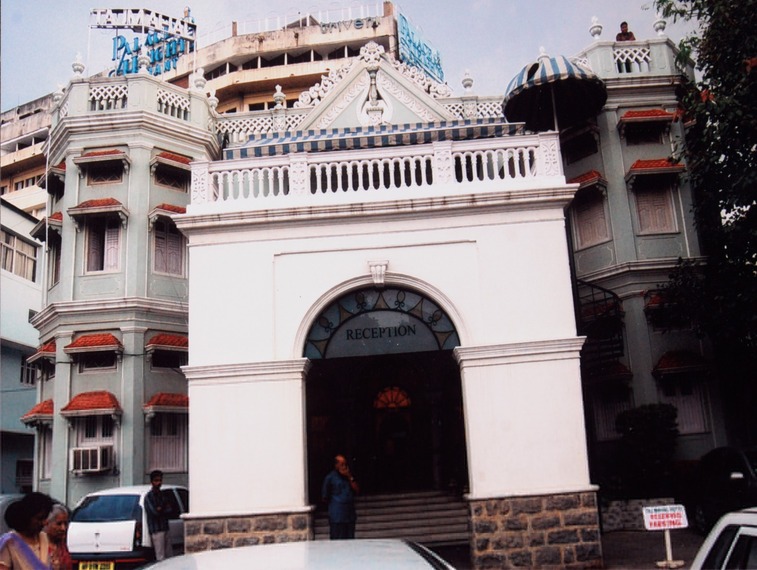
Taj Mahal Hotel, Abids, showcasing the charming heritage architecture that still captivates visitors today.
Taj Mahal Hotel premises is a Very popular vegetarian restaurant, it has been serving over 75 years, it is celebrated for its legacy and quality of its authentic vegetarian Udupi cuisine , a favorite for generations of local families and travelers alike. It is one of the oldest hotels of Hyderabad.
Taj Mahal Hotel in Abids stands as an enduring tribute to Hyderabad’s heritage and culinary tradition. Located in Abids , one of Hyderabad’s oldest and most vibrant and busy commercial shopping center of Hyderabad, India. The hotel occupies a striking heritage building recognized by the HMDA (Hyderabad Metropolitan Development Authority).
`Abids’was named after a shop owned by Albert Abid, a valet of the Nizam, and over decades developed into a buzzing centre of business, culture, and gastronomy .
It is learnt from sources that the Abids branch of Taj Mahal Hotel was established in the 1948 by two friends Anand Rao and Babu Rao along with Babu Rao's brother Sundar Rao.Originally a Parsi ancestral home, the building retains a distinctive charm, blending antiquity with aristocratic grace .The building has been formally recognized as a heritage structure by the HMDA ,highlighting its architectural and historic value.It exemplifies Indo-European architectural style , blending classic colonial and local elements with refined restraint.The structure has been sensitively conserved, maintaining good structural integrity while carefully integrating modern utilities and signage in ways that preserve elegance.
Taj Mahal Hotel premises is a Very popular vegetarian restaurant, it has been serving over 75 years, it is celebrated for its legacy and quality of its authentic vegetarian Udupi cuisine , a favorite for generations of local families and travelers alike. It is one of the oldest hotels of Hyderabad.
Taj Mahal Hotel in Abids stands as an enduring tribute to Hyderabad’s heritage and culinary tradition. Located in Abids , one of Hyderabad’s oldest and most vibrant and busy commercial shopping center of Hyderabad, India. The hotel occupies a striking heritage building recognized by the HMDA (Hyderabad Metropolitan Development Authority).
`Abids’was named after a shop owned by Albert Abid, a valet of the Nizam, and over decades developed into a buzzing centre of business, culture, and gastronomy .
It is learnt from sources that the Abids branch of Taj Mahal Hotel was established in the 1948 by two friends Anand Rao and Babu Rao along with Babu Rao's brother Sundar Rao.Originally a Parsi ancestral home, the building retains a distinctive charm, blending antiquity with aristocratic grace .The building has been formally recognized as a heritage structure by the HMDA ,highlighting its architectural and historic value.It exemplifies Indo-European architectural style , blending classic colonial and local elements with refined restraint.The structure has been sensitively conserved, maintaining good structural integrity while carefully integrating modern utilities and signage in ways that preserve elegance.
Distinctive Architectural Features
Built atop a raised granite plinth , lending an elevated and stately appearance . The facade is marked by a square portico with semi-circular arches, which gracefully welcomes guests.On either side of the central entry are octagonal rooms , featuring numerous windows and ventilators shaded with sloping tiled awnings—adding both functionality and style.Embellishments are subtle: stucco decorations and perforated screens crown the parapets and pediments, offering decorative appeal without overwhelming simplicity.The conversion into a hotel stands out as thoughtful adaptive reuse, retaining original architecture while accommodating modern hospitality functions.
The hotel comprises two distinct blocks:
The Heritage Block: housing 17 rooms, this section preserves the vintage charm, complete with antique furnishings, woodwork, and old-world ambience.
The Modern Block: consisting of 64 rooms, it provides more contemporary and affordable accommodations without compromising functionality.
The hotel comprises two distinct blocks:
The Heritage Block: housing 17 rooms, this section preserves the vintage charm, complete with antique furnishings, woodwork, and old-world ambience.
The Modern Block: consisting of 64 rooms, it provides more contemporary and affordable accommodations without compromising functionality.
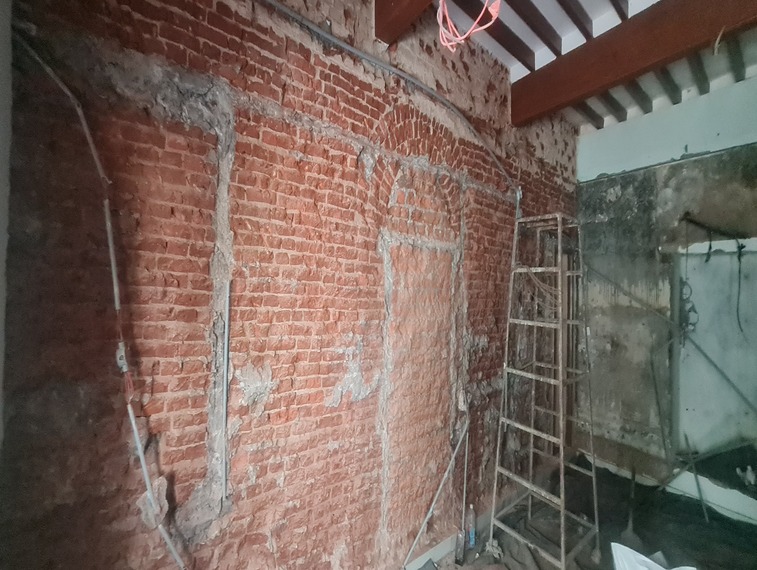
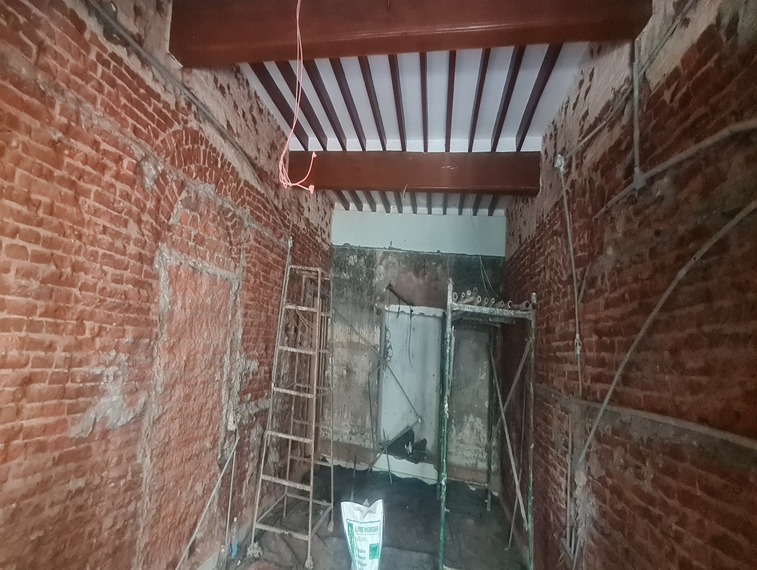
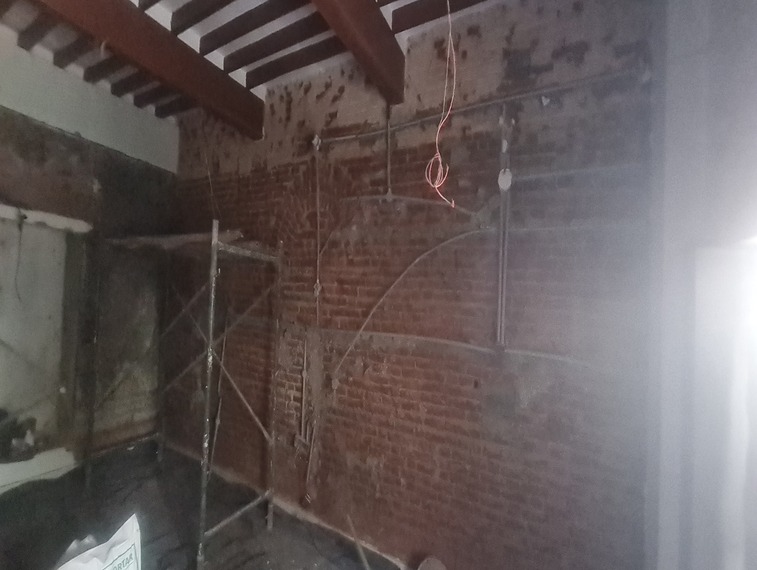
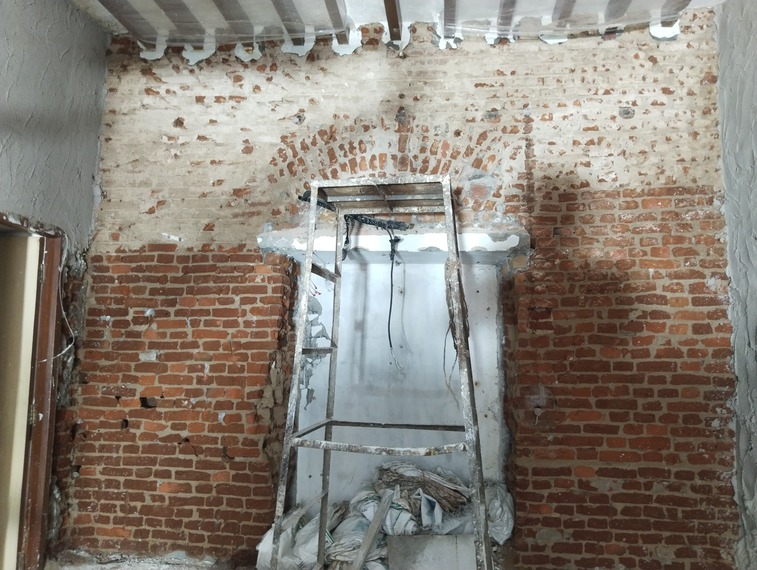
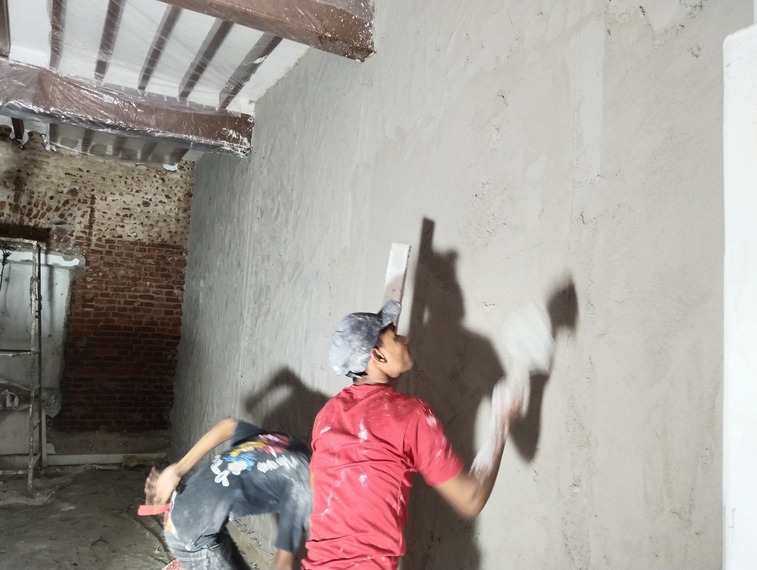
- Moisture damage: Due to constant moisture, the lime plaster weakened, bubbles and flakes appeared on Ceh Baara and paint, and algae formed on lime walls, causing water seepage and foul smell.
- Conservation treatment: Involved removal of deteriorated plaster, filling of cracks and gaps, and application of anti-fungal treatment with neem extracts.
- Replastering: Fresh lime mortar replaster applied on walls, followed by Ceh Baara application, using only natural lime materials.
- Final finish: Rendering an old-age lime finish look on the walls, restoring authenticity.