
Turkish Fabric with Gold Embroidary Restoration – Mecca Masjid Hyderabad
History
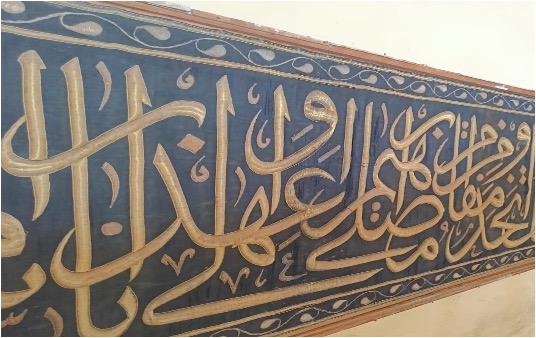
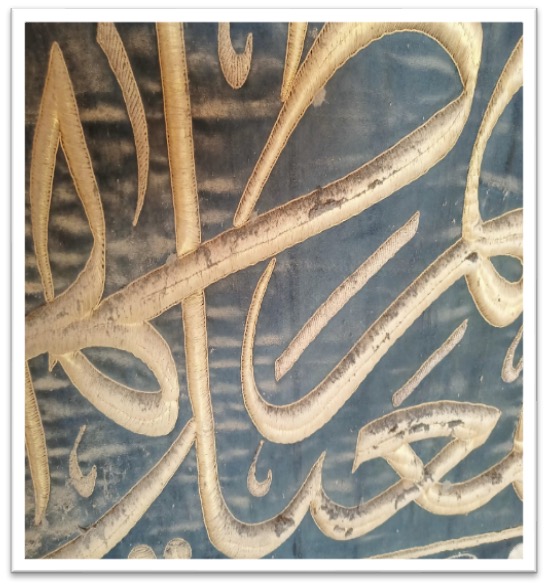
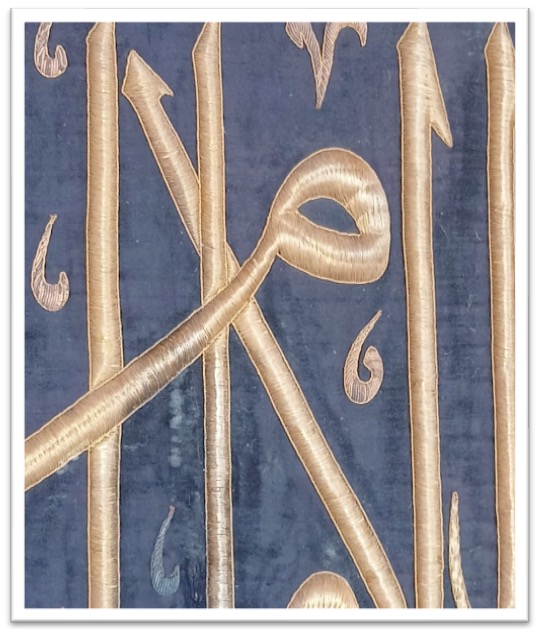
The "Lihaf of Kaaba," also known as the Qiswa, is the sacred cloth that covers the Kaaba in Mecca, with traditions tracing back to pre-Islamic times. Over centuries, the Kiswah evolved from white cloth with red stripes to green and eventually the black silk covering adorned with Quranic calligraphy in gold and silver threads, crafted through the art of Zar Dozi. It symbolizes reverence and sanctity, while also representing a long cultural and spiritual heritage. The four pieces of Qiswa preserved at the Mecca Masjid in Hyderabad were a royal gift from King Abdul Aziz of Saudi Arabia to H.E.H. the Nizam of Hyderabad. However, neglect and unsuitable storage conditions led to deterioration, including dust accumulation, fabric tears, insect and moisture damage, fading dyes, and weakened Zari embroidery where fragile metal threads broke along the inscriptions.
Restoration
Conservation work began with mechanical and visual inspections, detailed photographic documentation, and testing of the natural dyes, which revealed that the fabric had become fragile and colors were bleeding. Based on these findings, dry cleaning and careful mechanical cleaning with soft brushes were carried out to remove harmful lime dust and stains. Specialized treatments using diluted acetone, carbon tetrachloride, and methanol were applied to eliminate nail and screw stains, while anti-corrosion treatment was performed to stabilize and protect the delicate metal threads using Paraloid-B73. Finally, the Qiswa was mounted in a protective teak wood frame with diamond-clear glass, ensuring both its safety and aesthetic appeal for future generations.




1.tReplaced wooden members, realigned doors with handmade hingesnn2.tAdded handmade missing iron knobs on the wooden panel of the doornn3.tHand polished entire door and coated Matt finish PU MRF coat to protect form harsh weather.n